Luzz Glider vs Cannon: Which One to Buy (2026)
Last updated: September 2026
Control hybrid or power elongated — eleven points of swing weight decide it.
Buy the Luzz Glider 2026 Hybrid unless you already know you want a power paddle. It scores 8.8 to the Pro-Cannon's 8.6, swings eleven points lighter (108 against 119), spins more (~2,295 RPM against ~2,219) and is the only one of the two that is both USAP and UPA-A approved. It costs $119, or $101.15 with code PRH at Luzz. The Pro-Cannon is the cheaper paddle — $109, or $92.65 with PRH — and it is the right buy if you want reach and a 61 mph serve and you are willing to swing early to get them. The Glider rewards placement; the Cannon rewards pace. There is no middle setting between them.
How we tested
Every paddle we cover goes through the same on-court protocol - individual play, head-to-head comparisons, and tournament use before anything gets written down. Every paddle below has a full review on the site; click through to see scores, specs, and the deal we found for each.
The rankings
Each category below links to the full review for that paddle.
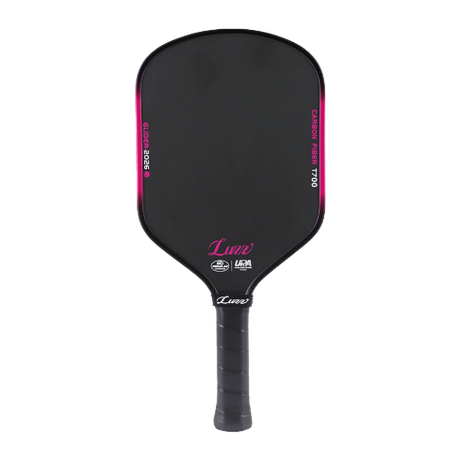
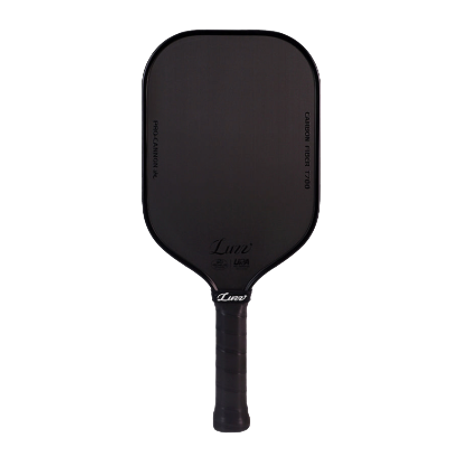
PRH PRH Codes on the shop buttons above match our /deals table. Most money brands use PRH (HEAD uses PRH15). Tap a button — we pass the affiliate link; paste the code at checkout if the brand asks.
Shop Glider 2026 Hybrid or Pro-Cannon with the live code
Each button is a tracked affiliate link at the sale price we list. Copy the code chip on the full review or use the code shown on the button label.
The short answer
These are not two versions of the same paddle. The Glider 2026 Hybrid is a control paddle with fast hands and a grippy face. The Pro-Cannon is a head-heavy elongated power paddle. They share a brand, a 16mm thickness, a T700 carbon face and a checkout code, and almost nothing else.
Most players searching for this matchup should buy the Glider. It is the higher-scoring paddle (8.8 against 8.6), it is far easier to play well, and it is approved for both USAP and UPA-A events. The Pro-Cannon is the specialist pick — and, unusually, the cheaper one.
Glider 2026 vs Pro-Cannon: the numbers side by side
- Shape — Glider: hybrid. Cannon: elongated.
- Overall score — Glider 8.8. Cannon 8.6.
- Swing weight — Glider 108. Cannon 119. This is the decisive number.
- Twist weight — Glider 6.4. Cannon 6.6.
- Static weight — Glider 7.83 oz. Cannon 7.9 oz.
- Spin — Glider ~2,295 RPM on the 984-Aero face. Cannon ~2,219 RPM on standard T700 grit.
- Power / control — Glider 7.8 power, 9.0 control. Cannon 8.8 power, 7.8 control. A clean mirror image.
- Hand speed — Glider 9.3 maneuverability. Cannon 7.6. The largest single gap on the card.
- Handle — Glider 5.5". Cannon 5.75", which suits two-handed backhands better.
- Certification — Glider is USAP and UPA-A. Cannon is USAP only.
- Price with code PRH — Glider $119 → $101.15. Cannon $109 → $92.65. Both 15% off at Luzz.
Swing weight is the whole decision
Eleven points of swing weight is a large gap — larger than most players expect from two paddles with a 0.07 oz difference in static weight. The Glider's 108 puts it among the quickest hybrids at any price. The Cannon's 119, paired with a 25.1 cm balance point, makes it genuinely head-heavy.
In practice that means the Glider recovers between shots and the Cannon does not. If you get caught in a hands battle at the kitchen with the Cannon, you will be late, and being late is not something you can train around inside a single point. The Cannon wants an early, committed swing; give it one and the mass works for you on drives and serves.
The flip side is plow-through. The Cannon carries momentum into the ball, which is why a $109 paddle posts a 61 mph serve. The Glider cannot do that — at 7.8 power it is the lowest-powered paddle in the Luzz line and it expects you to supply the pace.
Where the Glider wins
Control at 9.0, spin at 9.0, maneuverability at 9.3. The 8mm PP honeycomb core with structural reinforcement plays softer than the Cannon's thermoformed build, so the ball sits on the face rather than springing off it. Drops, dinks and resets are easier to aim, and the neutral balance means you are not fighting the head at the kitchen line.
The face is the other reason. The 984-Aero grit measures around 2,295 RPM against the Cannon's ~2,219, and it is noticeably coarse out of the box. Roll dinks and dipping thirds get real shape without you having to swing harder to find it.
It is also the only one of the two cleared for both USAP and UPA-A play. If you enter sanctioned events under either body, that removes a question you would otherwise have to check before every tournament.
Where the Cannon wins
Power, 8.8 against 7.8. Pop, 8.7 against 7.5. And a serve number — roughly 61 mph in third-party testing — that belongs on paddles costing twice as much. If your game is built on drives and serve pressure, that gap is not a rounding error, it is the reason to buy.
The 6.6 twist weight is also better than the Glider's 6.4, which is unusual for an elongated frame at this price. Off-center contact on the Cannon holds its line more than the shape would suggest. It does not make the paddle forgiving — 8.2 forgiveness against the Glider's 8.5 — but it keeps it honest.
And it is the cheaper paddle. $92.65 with PRH against $101.15 buys you the more powerful of the two, which is the opposite of how paddle lines usually price.
The price inversion worth noticing
Almost every brand charges more for the power paddle. Luzz does not. The Pro-Cannon lists at $109 and the Glider 2026 at $119, and code PRH takes 15% off both — $92.65 and $101.15 respectively.
So the $8.50 question is whether you want eleven points less swing weight, 76 more RPM, 1.2 more control, 1.7 more hand speed and UPA-A clearance. For most players that is an easy yes. If you are shopping strictly on price and you already play an elongated paddle, the Cannon is the better value of the two.
Enter PRH in the discount box at luzzpickleball.com and confirm the line item before you pay. It is our standing partner code rather than a seasonal sale, so it does not carry an expiry. Full details on our Luzz discount code page.
What about the Pro 4 Inferno?
The Pro 4 Blue Blaze Inferno is the third paddle people cross-shop here, and it scores highest of the three at 8.9. It is elongated like the Cannon but better built and more expensive, so it resolves the power question without the Cannon's compromises — at a price that puts it in a different bracket.
If you are genuinely choosing between all three rather than just these two, read our Glider vs Cannon vs Inferno comparison, which ranks the full line. Our which Luzz paddle should you buy guide walks the same tree by player type.
Which should you buy?
- Doubles, kitchen play, fast hands, spin — Glider 2026 Hybrid, $101.15 with PRH.
- Drives, serves, reach, lowest price — Pro-Cannon, $92.65 with PRH.
- Two-handed backhand — Cannon's 5.75" handle, unless hand speed matters more to you than leverage.
- You play UPA-A events — Glider. The Cannon is USAP only.
- You are upgrading from a beginner paddle — Glider. It is the more forgiving platform to learn on.
- You have ever been told your paddle feels slow — Glider, without hesitation.
Final verdict
The Luzz Glider 2026 Hybrid is the paddle to order. It beats the Pro-Cannon on overall score, control, spin, hand speed, forgiveness and certification, and the $8.50 it costs extra with code PRH is not a real consideration at this price level.
Buy the Pro-Cannon if — and only if — you want an elongated power paddle and you are honest with yourself about swinging early. At $92.65 it is one of the best power-per-dollar paddles we have tested. It is just not the paddle most people searching this comparison actually want.
Frequently Asked Questions
Luzz Glider or Luzz Cannon — which is better?
The Glider 2026 Hybrid, for most players. It scores 8.8 against the Pro-Cannon's 8.6, swings eleven points lighter (108 against 119), spins more (~2,295 RPM against ~2,219), and is approved for both USAP and UPA-A. The Cannon is the better buy only if you specifically want elongated reach and power — it hits a roughly 61 mph serve and scores 8.8 power to the Glider's 7.8.
What is the price difference between the Luzz Glider and Cannon?
The Glider 2026 lists at $119 and the Pro-Cannon at $109. Code PRH takes 15% off both at luzzpickleball.com, so you pay $101.15 for the Glider and $92.65 for the Cannon — an $8.50 gap. Unusually, the power paddle is the cheaper one.
Is the Luzz Glider or Cannon better for doubles?
The Glider. Its 108 swing weight and 9.3 maneuverability score mean it recovers between shots in hands battles, and its 9.0 control makes resets and dinks easier to place. The Cannon's 119 swing weight and head-heavy 25.1 cm balance make it slow at the kitchen line.
Which Luzz paddle spins more?
The Glider 2026, at roughly 2,295 RPM on its 984-Aero grit face, against roughly 2,219 RPM for the Pro-Cannon's standard T700 face. Both score well for spin — 9.0 and 8.5 respectively — but the Glider's surface is coarser out of the box and is the more spin-forward of the two.
Is the Luzz Cannon USAP approved?
Yes, the Pro-Cannon is USAP approved. The Glider 2026 is approved for both USAP and UPA-A. If you play under UPA-A rules, the Glider is the only one of the two currently cleared — check the governing body's current list before a sanctioned event either way.
What is the Luzz discount code?
The code is PRH, for 15% off at luzzpickleball.com. It applies to both paddles in this comparison and is not locked to a single model. Enter it in the discount box at checkout and confirm the discount line before you pay.
Related guides
PRH PRH Paste the code at checkout — then buy.
Brands on this page: Luzz. Codes are on each shop button and on /deals.
Other matchups worth reading
Comparisons featuring the same paddles as this one.